One article · Three projects · One method
I ran my own method on myself before offering it to anyone. Three steps: one sentence, one visual language, and one system that explains my ideas without a second job. This is what each one looks like, and what it produced.
The problem
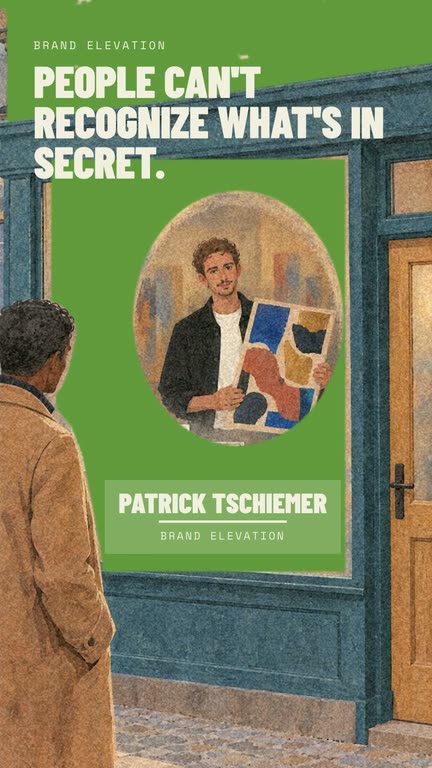
I arrived in Zürich as an adult. No English yet, a degree nobody here recognised, no local work history. Nobody was unfair. Everyone was efficient: they read the evidence I had left, and I had left almost none.
Every room works like that. It doesn't see your fifteen years. It sees what you leave behind, and files you under the guess.
Good work speaks for itself. But only to people who have already seen it.
That's the problem of almost every excellent independent consultant I meet. The value is real, and it doesn't travel past the people who already know. So I fixed it on myself first, in three steps. Each step is one project. Together they're one method.
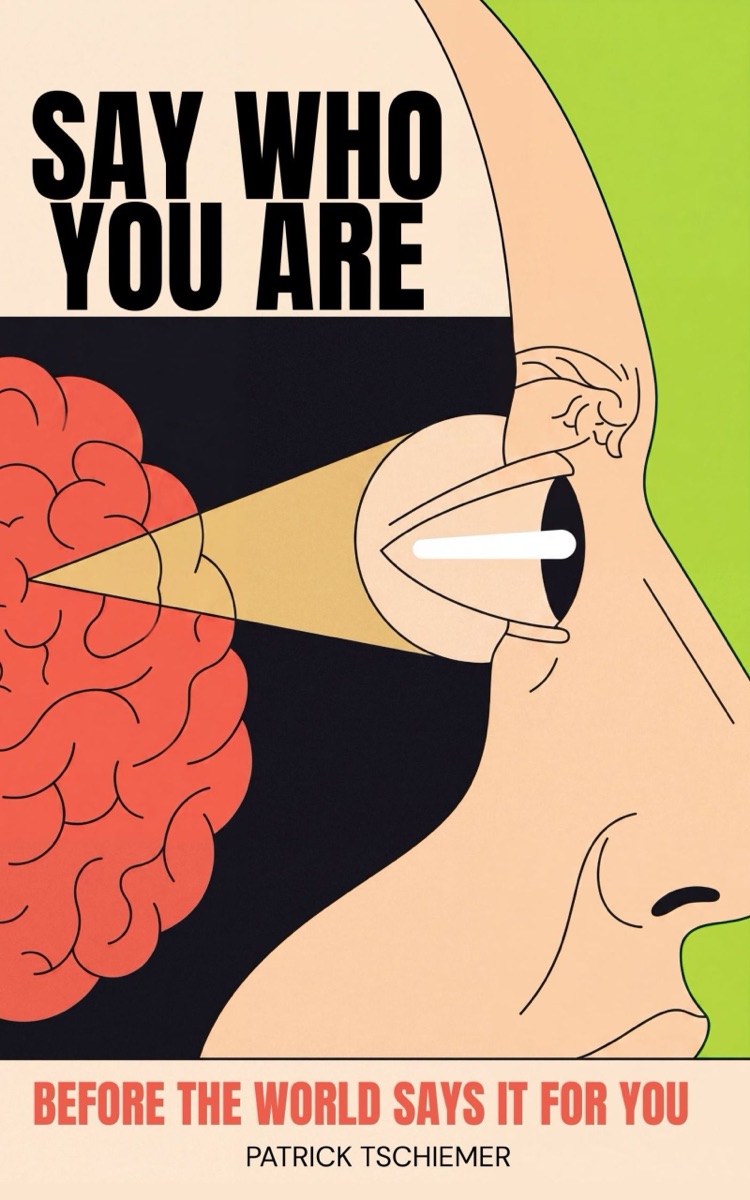
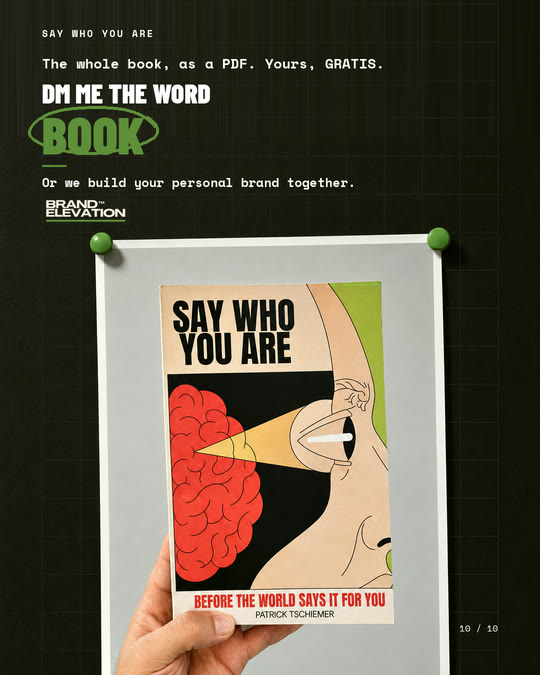
Before any design, any camera, any post, I answered the four questions a stranger asks before trusting anyone. Then I gave the method a name, and wrote the book behind it: Say Who You Are, 250 pages. Now every piece of content has somewhere true to come from.
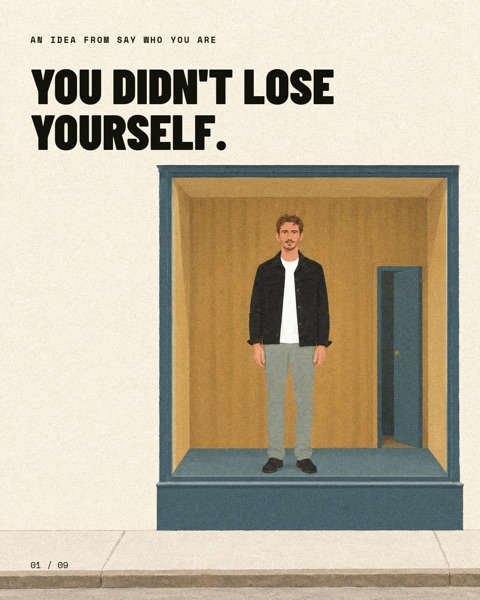
Say Who You Are. The memory everything else is built from.
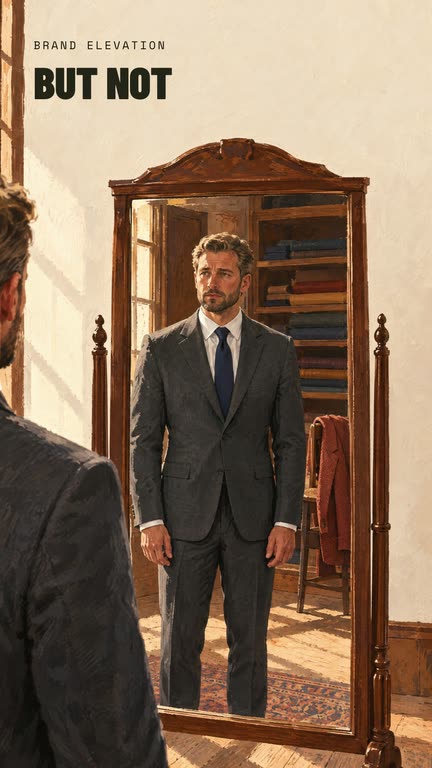
A better camera on top of an unclear message just records the confusion in higher resolution.
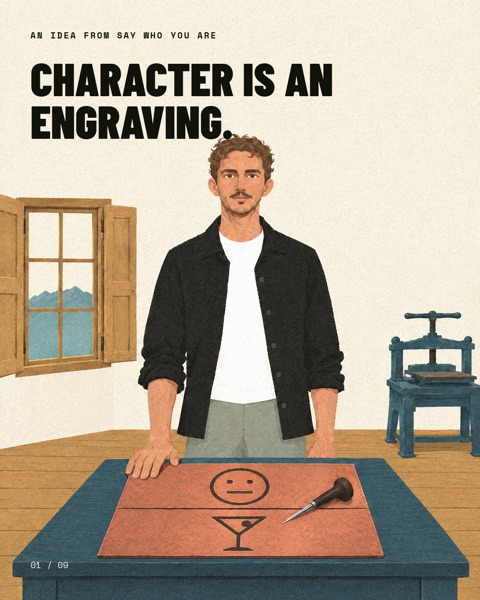
Most brands end up as a PDF in a folder: a logo, some colour codes, eleven pages of values. Nobody can run a PDF on a Tuesday. So instead of a brand book I built a language. Four rules, the same every week:


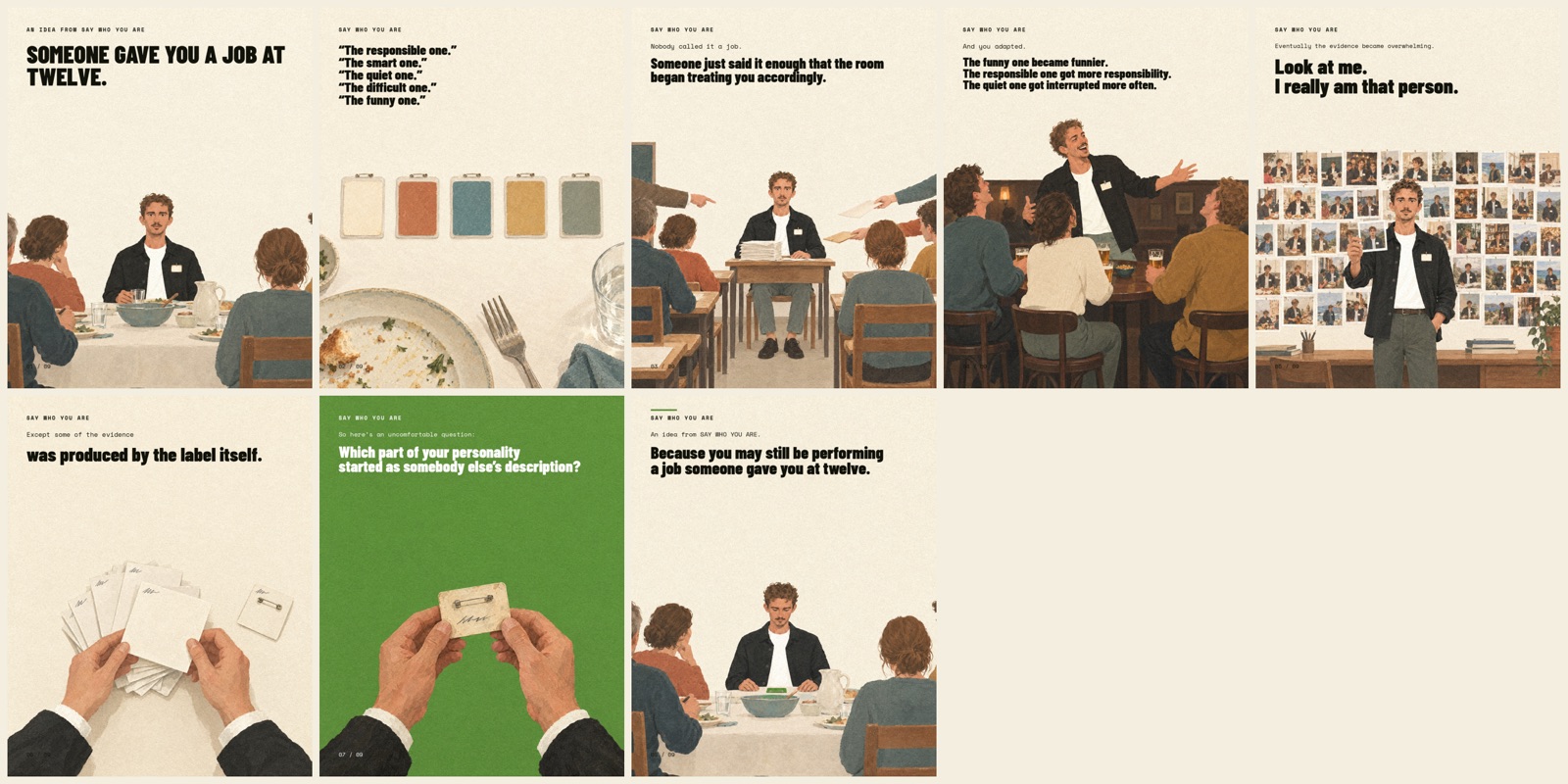
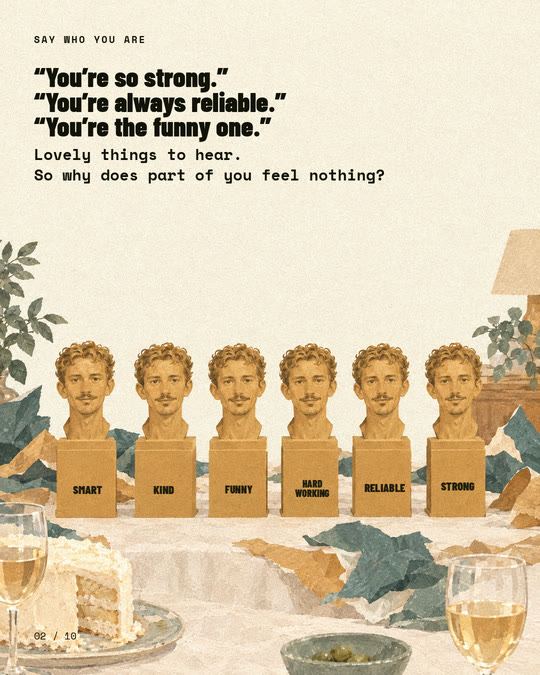
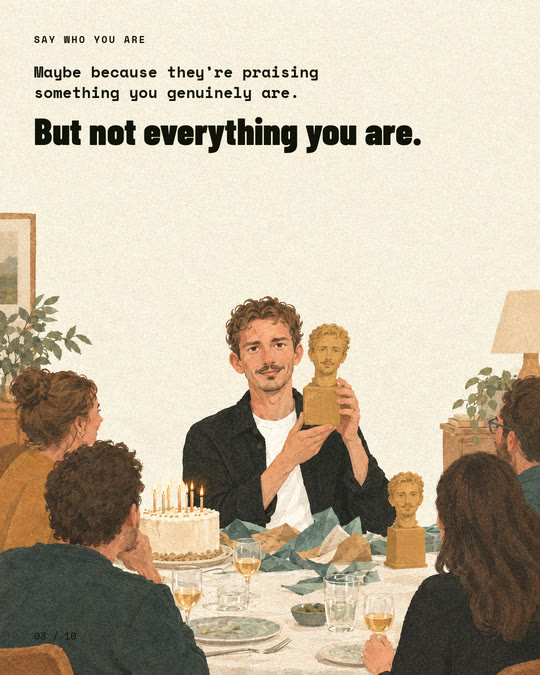
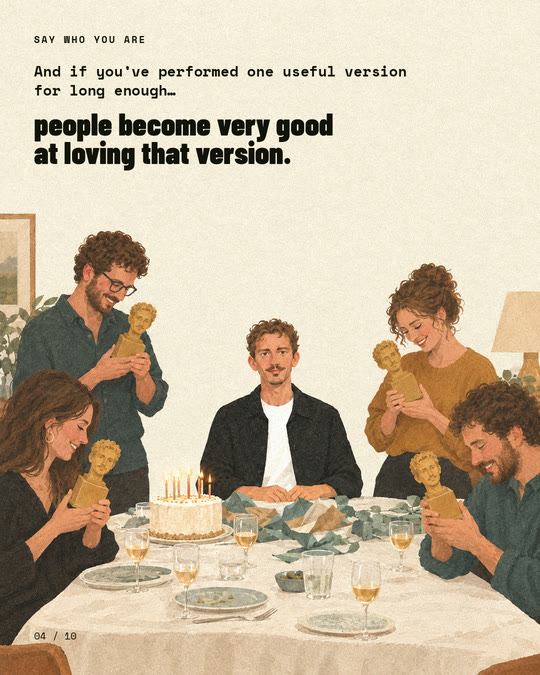
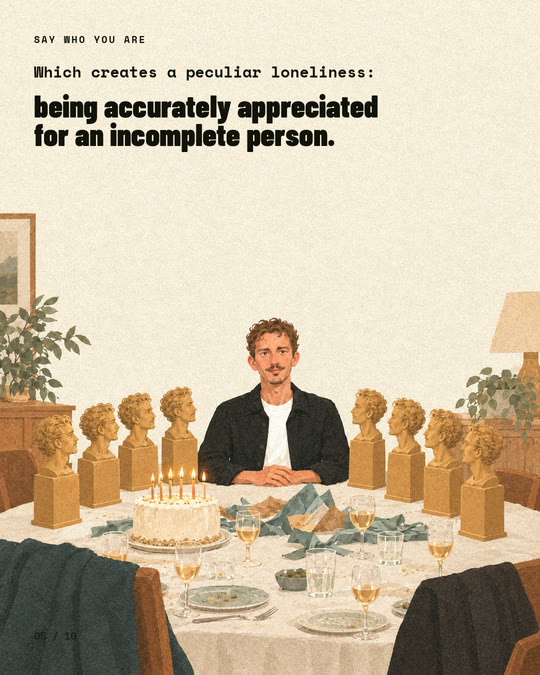
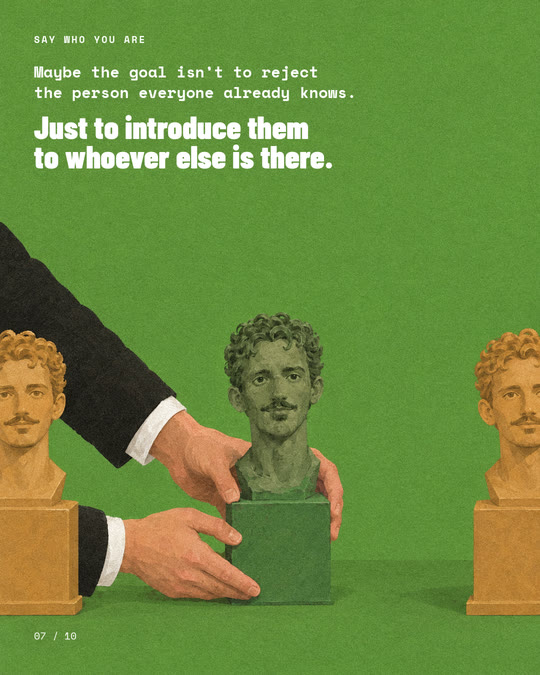
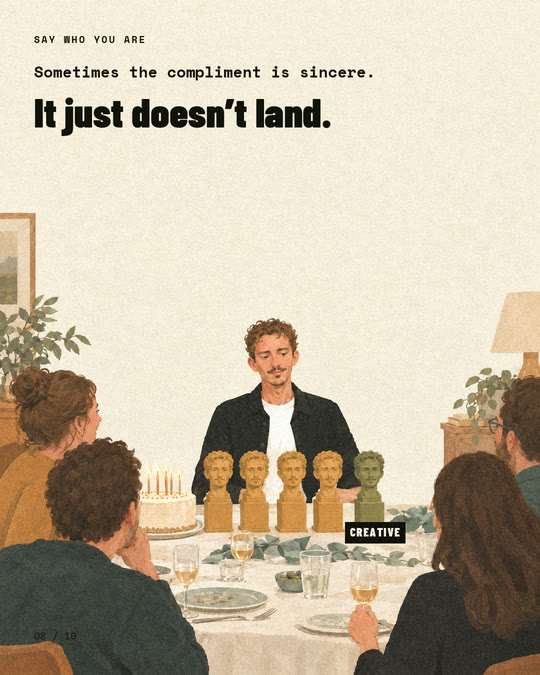
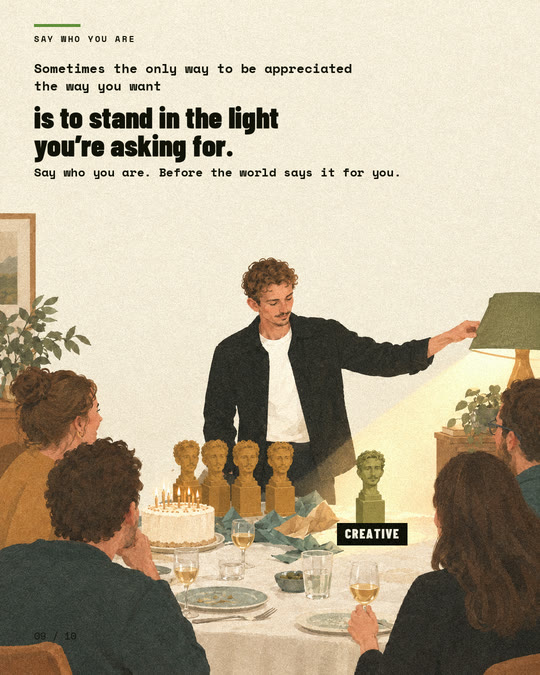
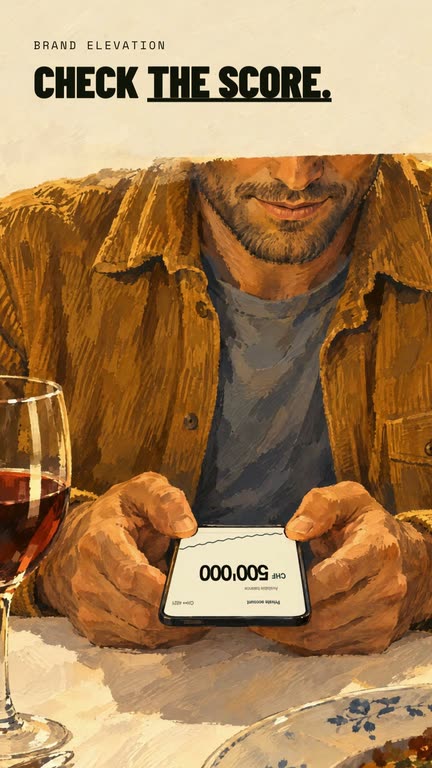
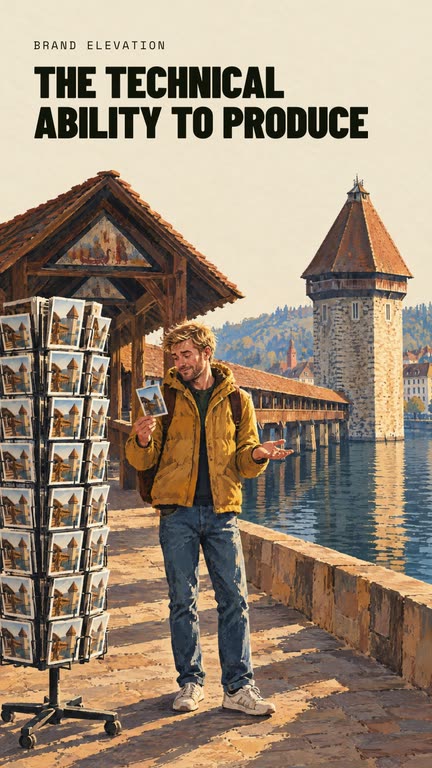
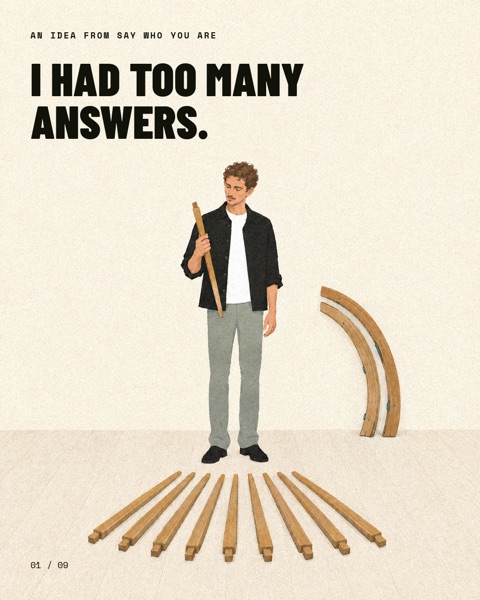
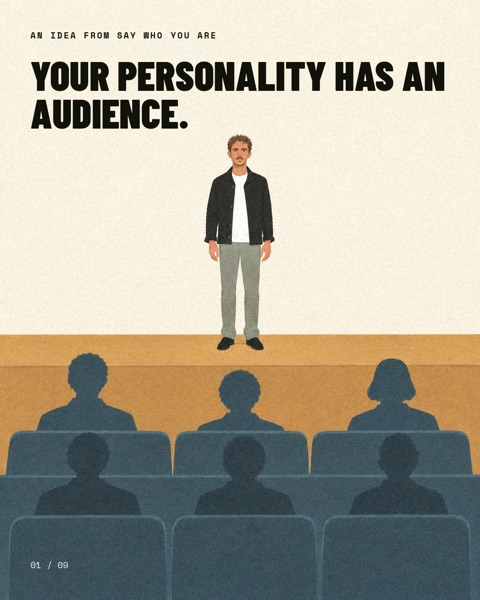
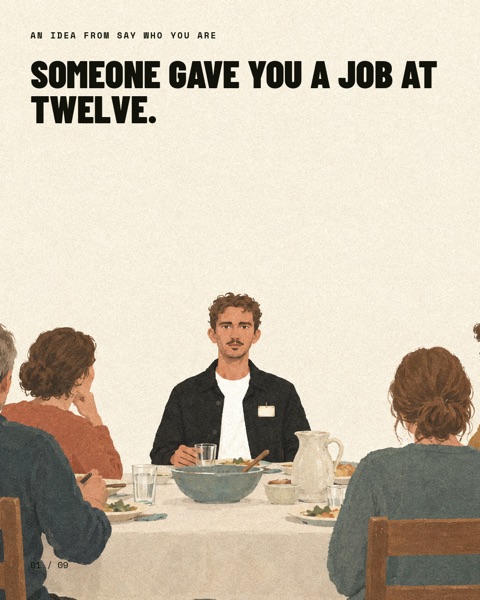
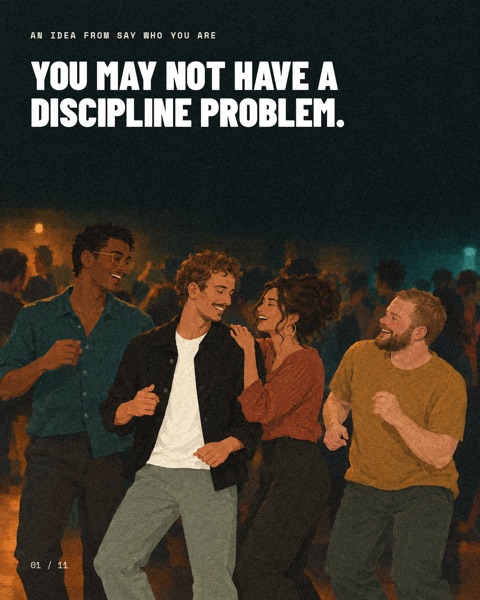
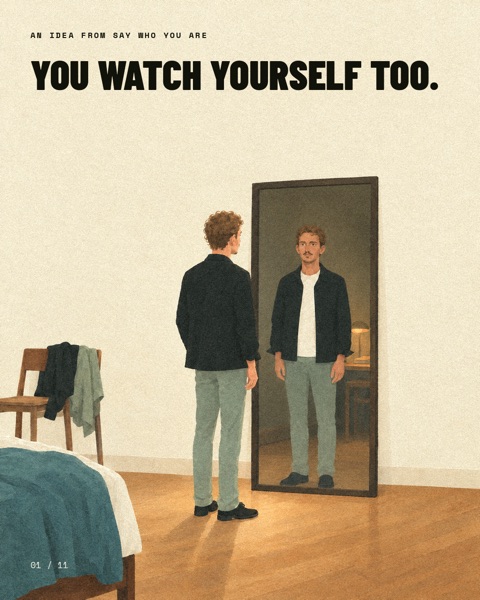
Some Compliments Don't Land. Ten slides, one idea from the book. The protagonist, one world (his own birthday table), and one green slide: the turn.
Showing everything you know makes you harder to read. One idea at a time, made visible.
That's the second job in the title. Being good happens at work. Being understood happens afterwards: every week, turning what you know into something a stranger can see, follow and remember. Most good people never take that job on. Not for lack of ideas: explaining them well, again and again, costs a Sunday every week.
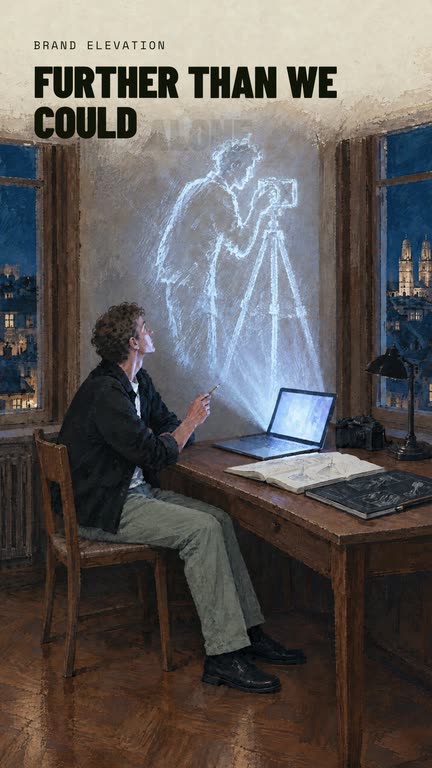
So I built something that explains and expresses my ideas. It doesn't automate them. The idea, the judgment and the voice stay mine. What the system adds is the form that makes an idea understood: a drawn world, the right words on screen, my face, the sound, the cut.
This reel says it in 42 seconds. Sound on.
White is me: the idea and every decision. The rest is the form that makes it understood, so explaining never turns into a second job.
It doesn't automate my ideas. It explains them.
Anyone can ask an AI for a picture. A picture doesn't explain anything. This system starts from what I've already decided about how my ideas should be said and shown:
Inside the system · The face
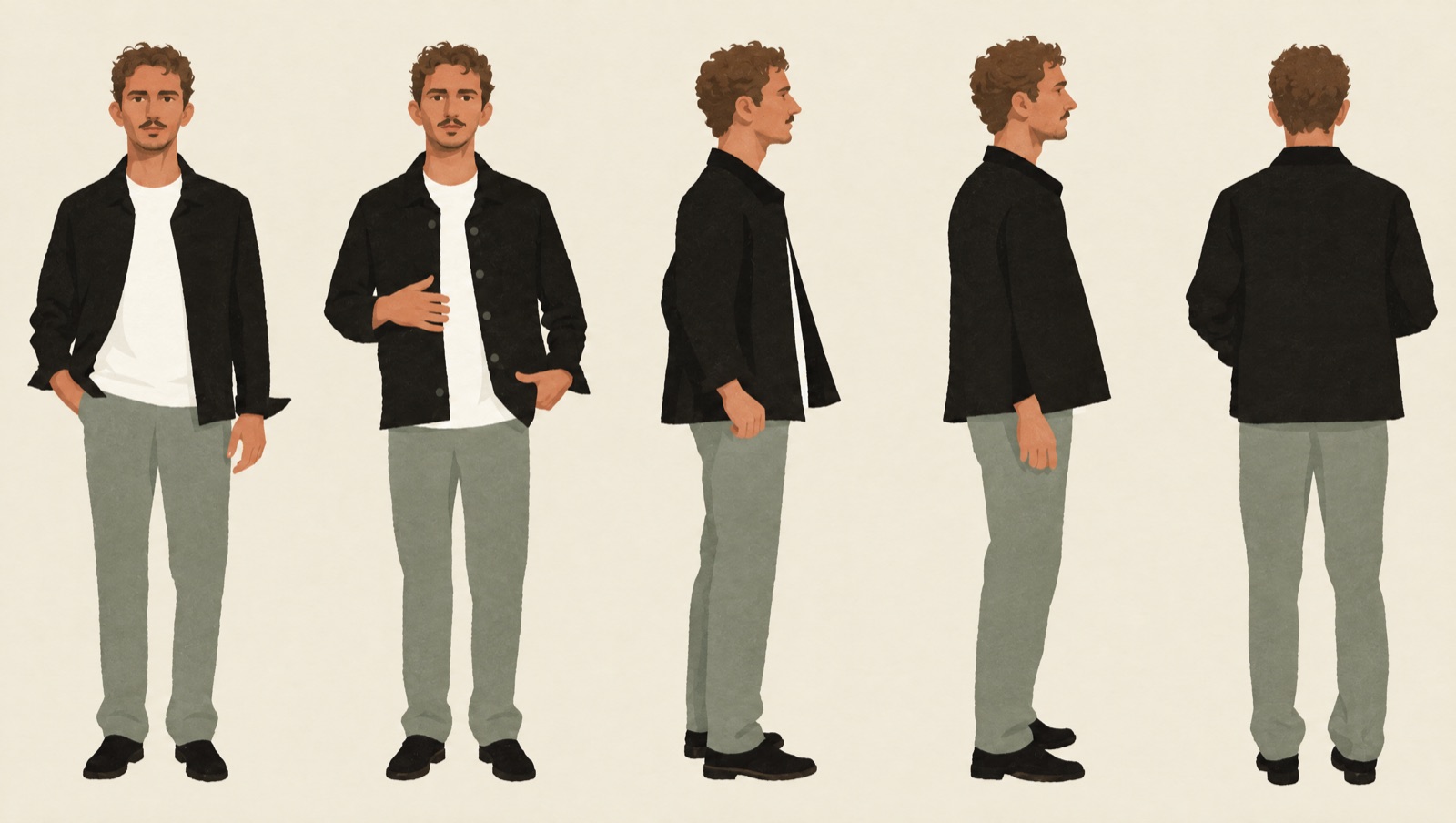
I sat down once and talked for fifteen seconds. Everything else here is that same take: the same gestures, the same timing. Only the room and the shirt change. On camera it's my AI clone, built from that take, speaking with my voice. That's how an idea from Tuesday comes out on camera without a shoot.
Top left, the original. The other five are the same fifteen seconds. Watch the hands.

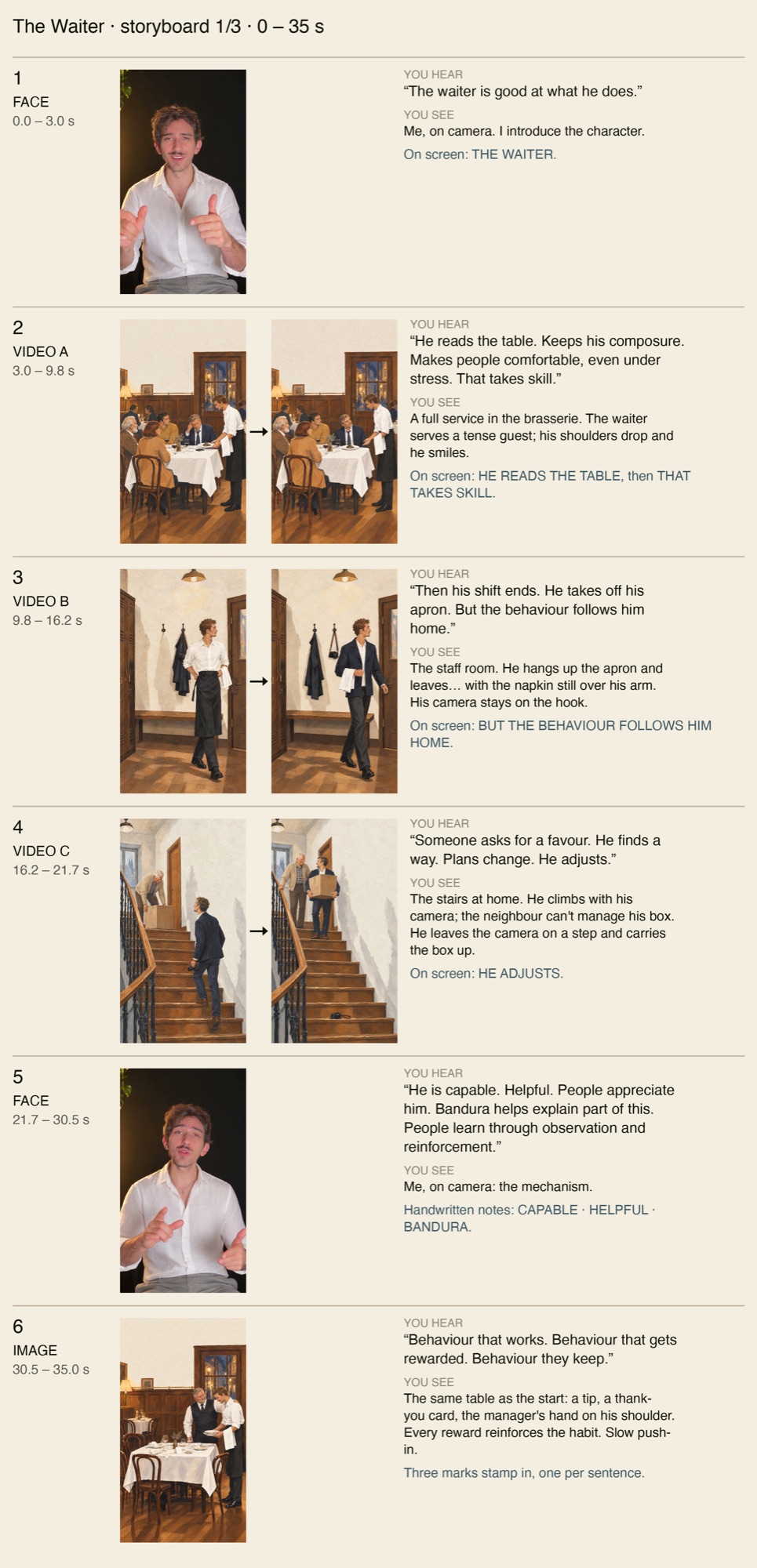
Before a single frame exists, every shot is on paper: what you hear, what you see, what's written. I correct it here, where changes cost nothing.
A library of our own, made for this brand. Mystery until the turn, release at the turn. A sound only plays when something happens on screen.
What it produced
Not a mock-up either. These pieces exist, and they're going out on Instagram now, one slot at a time.
The Tonhalle in Zürich, drawn from the real hall. Ninety musicians, and the most important person on stage doesn't make a sound. At the turn the chairs hold laptops instead of musicians, and the man on the podium is me, with a green baton. AI is the orchestra. Deciding what the piece means is still your job.
The idea and the text are mine. The system gave it the hall, the drawings, my face and the sound.
Your Work Doesn't Talk · 59 s
Behind the Result · 60 s
Who Is This For? · 80 s
The Score Is Not the Person · 71 s
Same Camera · 61 s
It Comes From You · 68 s
Better Than Your Swiss CV · 62 s
What Deserves Your Name · 66 s
The Funny One · 94 s
The Waiter · 88 sWhat this means for you
What I did on myself is the program. It runs in a fixed order, because each step only works if the one before it exists.
One to one, twelve weeks, one session a week. You don't film every week and you don't become an influencer. An influencer sells attention. A personal brand sells what you already do, at your price. You bring your ideas, in your own words. The system gives them a form people understand, every week, without it becoming a second job.
You keep the craft. The system keeps the cadence.
Available now · Zürich
The Perception Audit
Send me your profile. I'll send back three concrete observations, before any call.
Send me your profile →Would you rather send an email?
info@brandelevation.chI'm Patrick. I help independent consultants make their value understood before the first meeting. From Zürich, 1:1.
BEING UNDERSTOOD — Brand Elevation™ in one article: the sentence, the language and the system, run on its founder first. On camera, my AI clone with my voice; every decision, mine. © 2026 Patrick Tschiemer · Zürich.